Chapter 04
PCS Move With Kids: Tips for Every Age
Military children move more often than most of their classmates, and each move asks them to leave friends, a school and a routine behind. The good news is that families can do a lot to make it easier. This chapter covers why moves are hard for kids, what to do before the move, how to handle moving day, what the first weeks look like and how needs differ between young children and teens.
Why moves are hard for kids
What age is hardest for kids to move? There is no single age that every child finds hardest. Young children lose familiar routines and places, school-age children lose friends and teachers, and teens often lose a social world, a team or a role they spent years building. Temperament matters too: a shy child, a child with special needs or a child who has just lived through a deployment may need more time than a sibling.
A PCS move also comes with adult stress. Children notice packing boxes, shorter tempers and long phone calls, and they may read them as a sign that something is wrong. Honest, age-appropriate explanations tend to help more than silence. Families often find that a child who knows the plan and has a job in it copes better than a child who is only told at the last minute.
Many children also handle a move better than adults expect, because they have a built-in resilience from earlier moves. Treat their worries as real, but do not assume the move will go badly.
Before the move
How do you survive a PCS move with children? Start early, keep the news simple and give kids a role.
Talking
- Tell children as soon as the orders are firm, and before they hear it from a friend.
- Explain the basics: where you are going, when, what stays the same and what will change.
- Let them ask questions, and write down the ones you cannot answer yet so you can find out.
- Look at maps, photos and local websites of the new place together, and find activities your child enjoys.
- Give each child a task, such as choosing what goes in their hand-carry bag or labeling their boxes.
- Plan goodbyes. A small party, a photo book or an address list helps children keep friendships alive.
School records
School transitions are the part of a PCS move with the most paperwork. Military OneSource explains that the Interstate Compact on Educational Opportunity for Military Children helps with enrollment, placement and graduation when families move between states. All 50 states, the District of Columbia and the Department of Defense Education Activity have agreed to it.
- Request copies of records. Ask the old school for a copy of your child's records to bring to the new one, and use them until the official records arrive.
- Ask about advance enrollment. Some districts allow parents to enroll children before arrival; ask the new school or the school liaison.
- Know the grace period for immunizations. Military OneSource notes that families get 30 days after enrollment to provide any newly required immunizations, but check your state's rules.
- Placement and credit. The compact is intended to let children stay in their current grade level, keep an existing program placement if an equivalent is offered, and have prior coursework recognized.
- Seniors. When a senior transfers, the compact encourages the districts to work together so the student can still graduate.
- Special education. Children with an individualized education program have a right to comparable services at the new school, although the school may reevaluate eligibility.
Who can help? The school liaison at each installation is the main contact for school matters from pre-kindergarten through grade 12. Families with children who have special needs can also reach the Exceptional Family Member Program staff on the installation. The Military Interstate Children's Compact Commission at MIC3 publishes state-specific procedures and parent guides.
The records are also a good reason to build a folder as described in the PCS checklist: school, immunization and medical records stay with you in the car or your hand luggage.
Moving day
Moving day is long and loud, and children need a calm place within it.
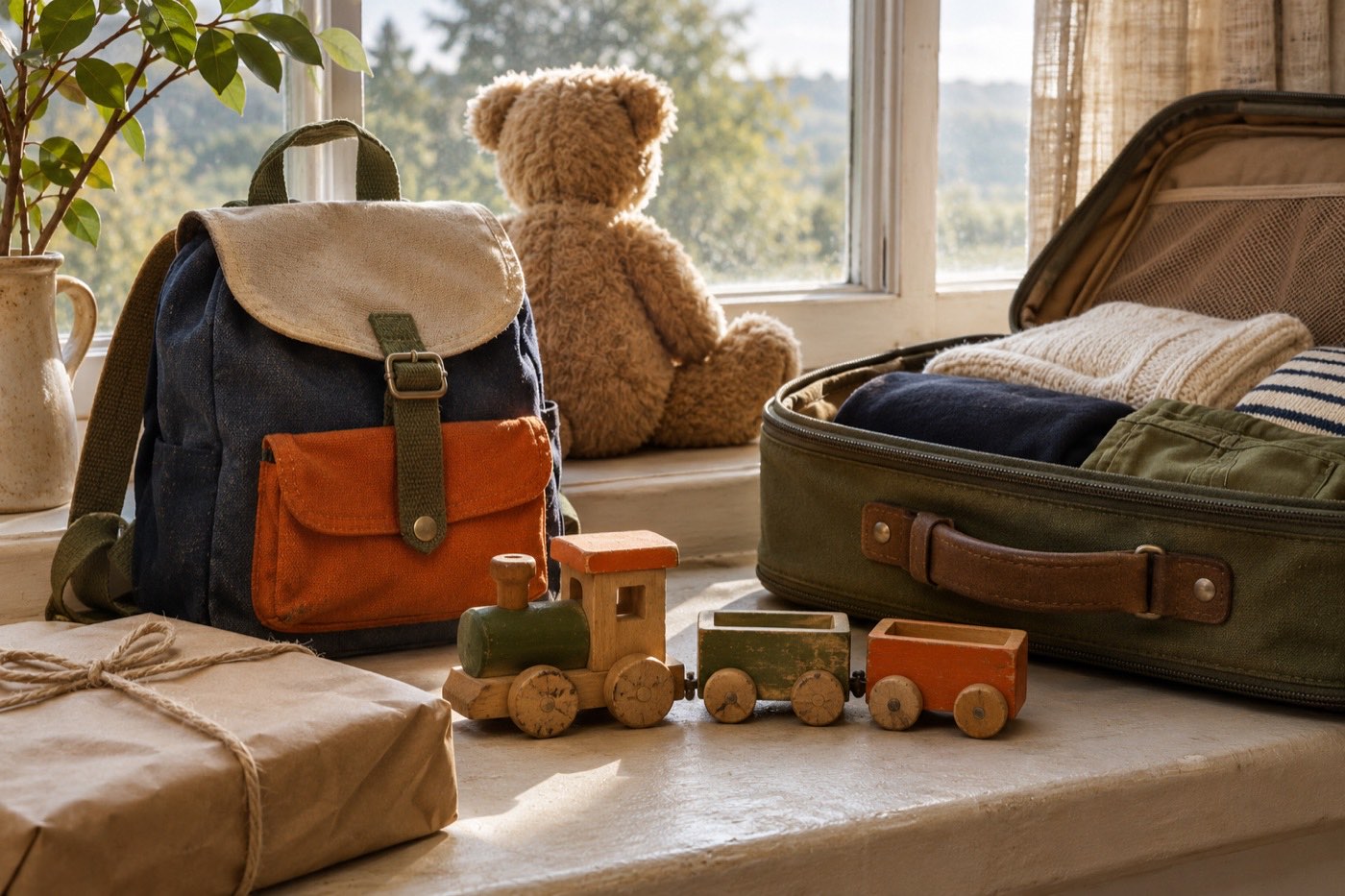
- Pack a hand-carry bag for each child: a comfort item, snacks, water, a change of clothes, chargers and a favorite game or book.
- Keep a few toys and bedding out of the shipment, so the first night in the new home feels familiar.
- Arrange a safe spot for young children, or a babysitter or relative, while packers are working.
- Take a last photo of each room and the child's room in particular, and let them say goodbye to it.
- Keep routines where possible: meals and bedtimes help, even on a travel day.
- Remove wall items and secure pets so they do not get lost or stressed.
Travel days can be a surprise source of joy. Plan stops, games and a small surprise for the road, and let children choose the playlist.
First weeks
The first weeks decide how quickly a child feels at home. Unpack their room first, put up familiar pictures and bring back routines as soon as possible.
3-3-3 idea
What is the 3-3-3 rule for children? It is an informal rule of thumb that many parents and counselors use, and it is not an official policy or a research finding. The idea is to give a new situation three days to observe and settle, three weeks to learn the routine and three months to start to feel at home. Families use it to remind themselves that feeling unsettled at first is normal.
A simple way to apply it:
- First three days. Keep expectations low. Unpack the essentials, eat together and explore the immediate neighborhood.
- First three weeks. Build routines for school, meals and bedtime. Introduce yourself to neighbors and the school staff. Find a regular activity.
- First three months. Look for friendships, clubs and teams. Check in about how your child feels, and consider asking the school counselor or the installation family support staff for help if sadness or anxiety does not ease.
Visit the school before the first day if possible and ask who the contact person is. Learn what child services the installation offers, such as youth programs, child care and counseling. Military OneSource also offers counseling and consultants by phone or video, around the clock.
Teens and young kids
Young children
Young children rely on routine and on you. Keep bedtime stories, favorite meals and comfort objects. Let them show you the new place through drawings or play. Expect regression for a while, for example more clinging, sleep trouble or toilet accidents, and treat it as a temporary reaction to change.
School-age children
Primary school children need a quick path to friendships. Look for a class buddy, an after-school club and playdates. Maintain old friendships with letters, video calls and photo exchanges, since this keeps them from feeling that they have lost everything.
Teens
Teens often have the hardest time with the loss of social ties, sports or special classes. Involve them in the decision-making that is possible: housing neighborhood, school options, clubs and how to stay in touch with friends. Respect that they may be angry. Many teens do better when they join one activity quickly, such as a team, a job or a volunteer role, and when they get a say in how their new room looks.
Ask the school liaison about credit transfers, graduation requirements and extracurricular eligibility for older students. Seniors in particular should get a written plan early.
Children with special needs
Start early if your child has medical, educational or developmental needs. Contact the Exceptional Family Member Program staff, gather evaluations and plans, and ask for the new school's special education contact before you arrive. For overseas moves, screening is part of the process; the OCONUS PCS guide explains how.
What stays with the family
Whatever the age, remember that you are the constant. A child's sense of home does not rest on a building but on the people, traditions and routines that travel with them. Plan a small ritual for every move, such as a first meal in the new home, a family walk or a map where each station is marked, and the next move will start with a tradition instead of a worry.